In commercial and multi-unit projects, flooring decisions aren’t necessarily about trends. They’re about performance. Hallways, corridors, entryways, and shared spaces experience concentrated, repetitive use that quickly exposes weak materials, poor construction, and short-sighted product choices.
Failures can create noise complaints, tenant disruption, maintenance headaches, and premature replacements. The goal isn’t to overbuild. It’s to choose materials that perform where traffic is real and constant.
What High Traffic Really Means
True high-traffic environments aren’t living rooms or bedrooms. They’re spaces where foot traffic is repeated, directional, and unavoidable such as apartment and condo corridors, hotels and extended-stay hallways, office circulation routes, and student housing and institutional buildings.
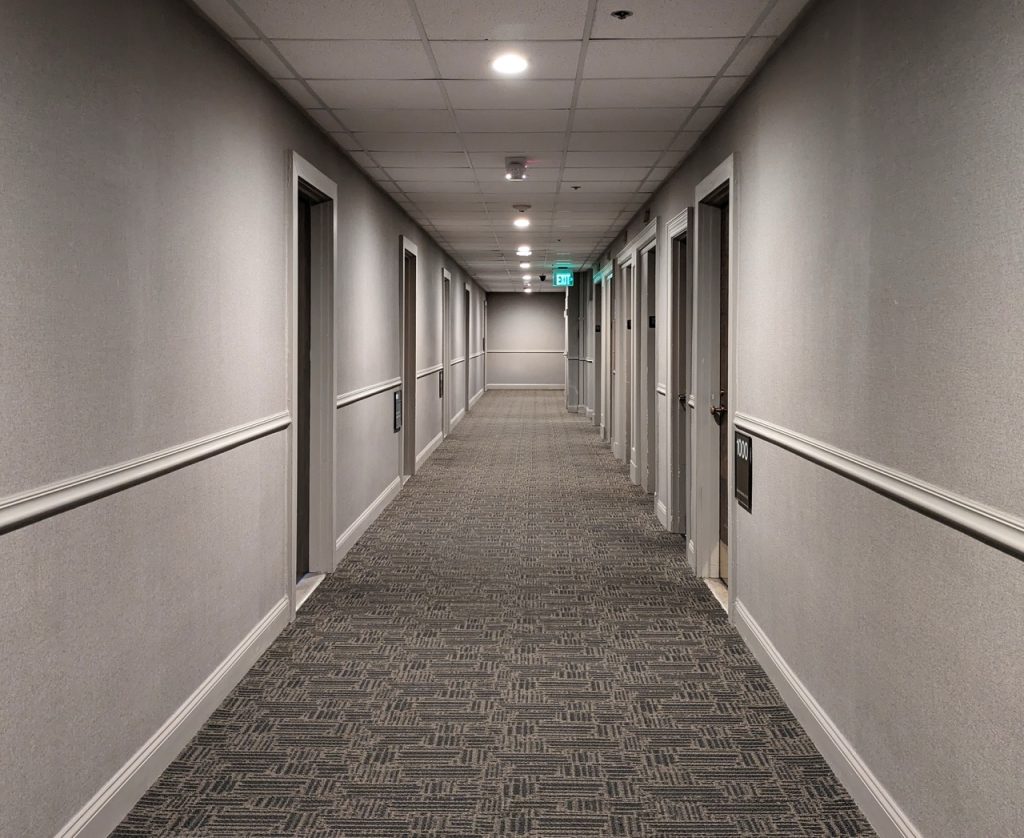
In these environments, flooring is tested daily by foot traffic, rolling carts, luggage, cleaning equipment, and seasonal moisture. Your typical flooring materials that perform well in homes often aren’t built for this kind of wear.
Why Carpet Tile Is the Commercial Standard
In multi-unit and commercial buildings, carpet tile remains the dominant flooring choice for corridors, and for good reason. It delivers superior sound absorption, exceptional durability under repetitive traffic, and it is easy to maintain and replace.
In practice, carpet tile is rarely removed because it wears out. Most replacements happen during renovations or aesthetic updates, not because the product failed.
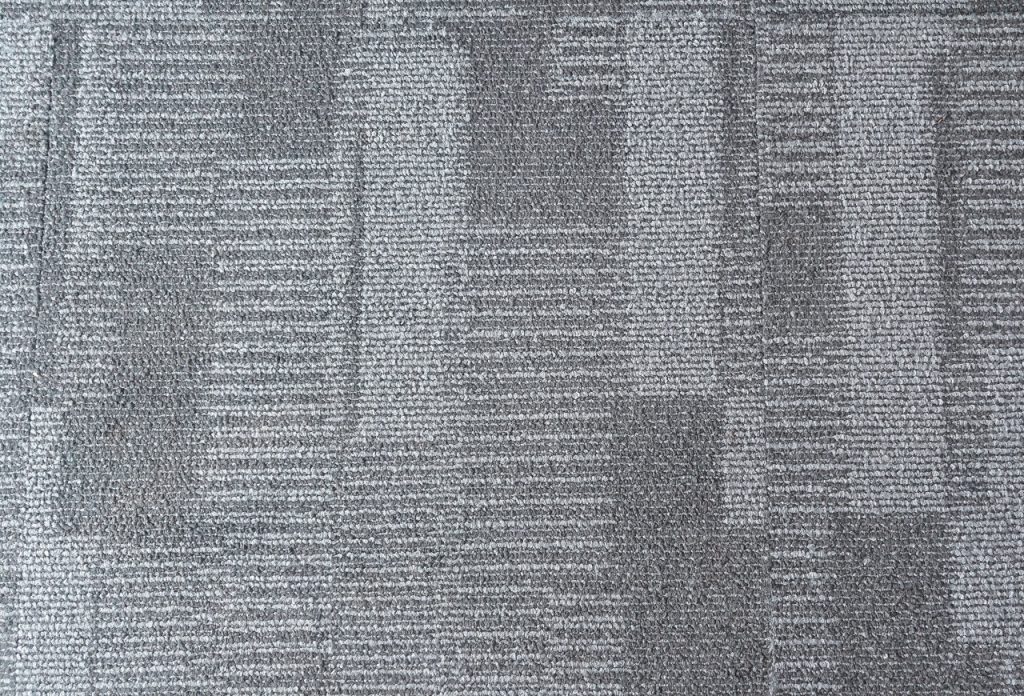
The Acoustic Advantage
Hard flooring surfaces like tile and vinyl may appear durable, but in long corridors they create significant acoustic problems. They often amplify foot noise, create an echo with rolling carts and luggage, and overall they increase sound transmission between units. In contrast, carpet tile absorbs sound, reduces echo, and improves the overall acoustic comfort within a building — a critical factor in tenant satisfaction and perceived build quality.
What Actually Determines Performance
Not all carpet tiles are created equal. Performance is determined by fiber composition and construction quality.
NYLON (PREFERED CHOICE)
- Most resilient fiber
- Excellent recovery under heavy traffic
- Longest service life
- Best balance of performance and cost
Polypropylene
- More water resistant
- Less resilient under sustained traffic
- Used selectively in moisture-prone areas near entrances
WOOL
- Premium material
- Has limited use in true high-traffic corridors
Colours and Patterns: Extending the Visual Life of the Floor
In high-traffic commercial spaces, colour choice directly impacts how long a floor looks clean.
Proven colour strategies include charcoal greys, dark neutrals, and earth tones. These palettes help mask dirt and wear, and hide moisture and salt residue common in Atlantic Canadian winters. They also help reduce visible traffic patterns between cleaning cycles.
The goal is to extend the visual lifespan of the floor, not just its physical durability.
Entryways and Lobbies: Designing for Cleanliness
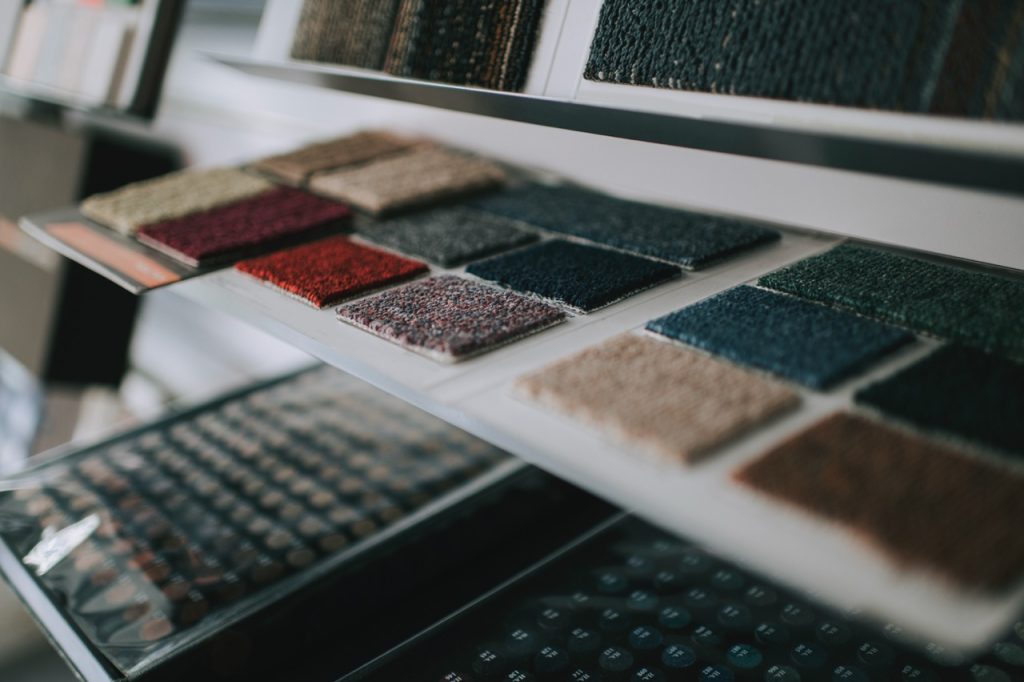
First Building entrances experience the harshest conditions with moisture, salt, dirt, and grit. Best practice for commercial entry zones is to use tile in vestibules and lobbies for easy cleaning, and then transition to carpet tile in corridors to control sound and wear.
This combination balances maintenance efficiency with occupant comfort.
Performance-Driven Flooring Wins Over Time
Installing the right product once is almost always cheaper than replacing the wrong choice twice. High-traffic commercial flooring succeeds when decisions are based on real-world use and proven materials.
We help contractors and developers choose flooring that performs beyond installation day, through years of daily use with performance-first product guidance and deep commercial experience. From corridors to units to entryways, we help you finish strong.
The Floor Is Yours.